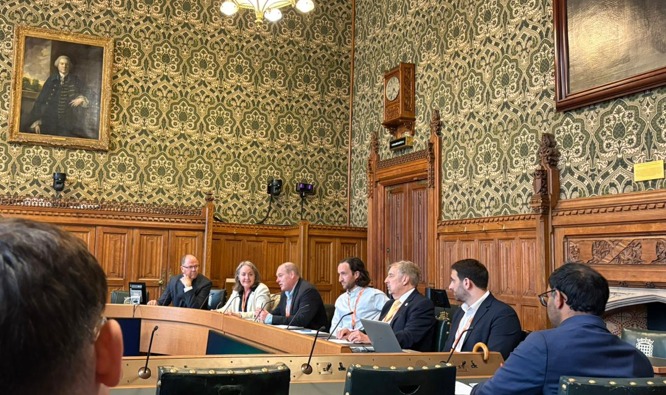
Later Life Ambitions (LLA) joined policymakers, regulators, banking representatives and charities at an All-Party Parliamentary Group (APPG) meeting in the Houses of Parliament yesterday to discuss access to cash, fair banking, and the growing challenge of financial exclusion.
The event brought together representatives from organisations including the FCA, LINK, Cash Access UK, the Post Office, UK Finance, RNIB, Fair4All Finance and Santander, alongside MPs and parliamentary representatives from Labour, Conservative and Liberal Democrat parties.
Speaking as a representative of the LLA, General Secretary Sally Tsoukaris highlighted the impact that rapid banking digitisation and bank branch closures are having on older people, disabled people and those who remain digitally excluded.
Addressing attendees, she warned that many people are being “penalised for a lifestyle they didn’t choose” as face-to-face banking services continue to disappear from communities across the UK.
The speech focused on four groups most at risk of being left behind: digitally excluded people, those living with disabilities and health conditions, victims of fraud, and residents of rural and isolated communities.
She also raised concerns about the pace of banking hub delivery, arguing that branch closures are occurring faster than replacement services are being introduced. While welcoming the role of banking hubs and the Post Office network, she stressed that many communities remain without adequate access to in-person banking services.
A key theme of the discussion was the distinction between access to cash and access to wider banking support. LLA argued that while current legislation protects the ability to withdraw and deposit cash, it does not guarantee face-to-face assistance with issues such as fraud, bereavement, power of attorney, or complex account management.
Among the points raised during the meeting was the need for a “digital-by-choice” approach rather than a “digital-by-default” model for essential services.
One of the speech’s central messages was:
“Digital inclusion is not a fixed destination.”
LLA argued that as technology evolves, new forms of exclusion will continue to emerge, making accessible offline alternatives essential for future generations as well as today’s older people.
The organisation also called on regulators and banks to ensure communities are not left without services during transitions, and urged greater protection for the continued acceptance of cash in everyday transactions.
She told attendees:
“We are asking those here present to keep the needs of those in later life front and centre in considering whether more can be done to ensure, through legislative, regulatory, commercial or other changes, that their needs are accommodated in the face of rapid market changes.”
The meeting explored the effectiveness of banking hubs, the impact of branch closures on vulnerable groups, and what further legislative, regulatory and commercial changes may be required to ensure no one is left behind as the UK’s banking system continues to evolve.