
Throughout the year we will be sharing information on our campaign focus areas. Those topics we feel strongly about and are fighting for on behalf of our members.
This month we are discussing supporting older people in the workplace.
Ageism is one of the most common yet overlooked forms of workplace discrimination. Unlike other forms of bias, it is often disguised as humour, tradition or “common sense”, making it so deeply ingrained that many people fail to recognise it as discrimination. Phrases such as “you can’t teach an old dog new tricks” or assumptions that younger workers are entitled or inexperienced reinforce harmful stereotypes that can influence recruitment, promotion and workplace culture.
Ageism can affect people of all ages, but older workers are particularly vulnerable. It can take many forms, including being overlooked for training opportunities, excluded from career progression, or assumed to lack digital skills. Equally, younger employees may be dismissed as inexperienced, unreliable or incapable of leadership. These stereotypes prevent organisations from benefiting from the diverse skills and perspectives that a multigenerational workforce offers.
The scale of the issue is significant. According to the Centre for Ageing Better, around one in three people aged 50–70 report experiencing age discrimination in their daily lives, with the workplace being one of the most common settings. The CIPD’s 2022 research found that 36% of workers aged over 50 have experienced age discrimination at work, demonstrating that ageism remains a widespread issue despite legal protections. Age UK has also highlighted the impact of workplace ageism on confidence, wellbeing and financial security, particularly for those trying to remain in or return to employment later in life.
Research from Independent Age argues that ageism has become normalised within British society, often going unchallenged because stereotypes about ageing are so widely accepted. Casual comments about someone being “past it”, assumptions that older employees cannot learn new technology, or beliefs that investing in their development is a poor use of resources are often dismissed as harmless. Yet these attitudes shape workplace decisions and limit opportunities. The reality is that skills, adaptability and ambition are not determined by age.
Tackling ageism requires more than changing attitudes—it requires meaningful action. As part of Late Life Ambitions, we are calling for stronger enforcement of existing anti-discrimination laws to ensure employers are held accountable when age bias occurs. We also support government-backed skills programmes for older workers, including digital retraining, to help people remain competitive in a rapidly changing labour market. In addition, employer incentives, such as reduced National Insurance contributions for recruiting and retaining older workers, could encourage businesses to recognise the value of experienced employees. By challenging outdated stereotypes and investing in workers of all ages, we can build a labour market where experience, potential and ability, not age, determine opportunity.
Later Life Ambitions
Later Life Ambitions brings together the collective voices of over a quarter of a million pensioners through the National Federation of Occupational Pensioners, the Civil Service Pensioners’ Alliance, and the National Association of Retired Police Officers Association.
We aim to encourage today’s decision makers to confront the challenges of tomorrow.
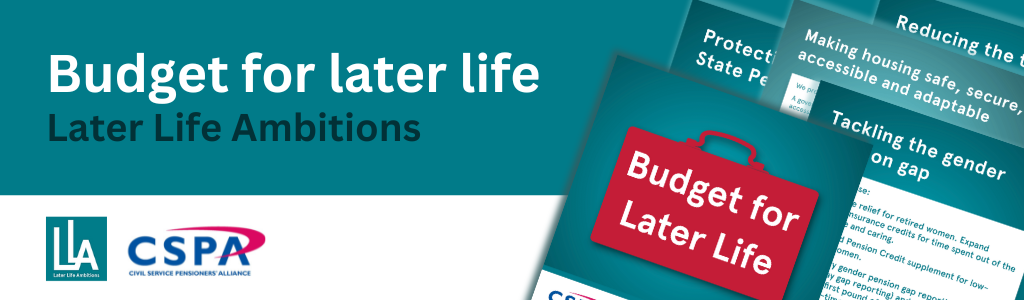
What we're calling for:
This Budget presents our plan for a fairer, more sustainable deal for older people. we urge you to stand with us and add your voice to our calls for a fair deal for living well in later life.
- Protecting the State Pension
- Reducing the tax on pensions
- Tackling the gender pension gap
- Supporting older people in the workplace
- A minimum income guarantee
- Widening access to public transport
- Making housing safe, secure, accessible and adaptable
- Supporting health and social care