As more parts of everyday life move online, digital access has become increasingly important. Shopping, banking, accessing services and managing money are all areas where digital tools are now widely used. However, not everyone has the same access, confidence, or ability to rely on digital solutions.
LINK’s Keeping Choice Alive: Measuring Cash Acceptance on the UK High Street report explores the changing role of cash and what this means for people, businesses and communities across the UK.
The report highlights an important point: while digital payments are growing, cash remains a vital part of everyday life for many people.
Cash is still an important choice
The way people pay has changed significantly in recent years. Contactless payments and online banking have become common, but cash has not disappeared.
LINK’s research found that 77% of high street retailers still accept cash, and 46% of in-person transactions are still made using cash.
For many people, cash is more than just a payment method. It can provide a sense of independence and control. Managing physical money can help people budget, track spending, and avoid the risks of overspending that can come with digital payments.
Cash also provides an essential alternative for people who may experience barriers with digital services. This includes people who do not have access to a smartphone, reliable internet connection, digital banking, or who lack confidence using online systems.
For some communities, keeping access to cash is an important part of staying connected to everyday life.
The shift towards cashless payments
The report also looks at the changing relationship between businesses and cash.
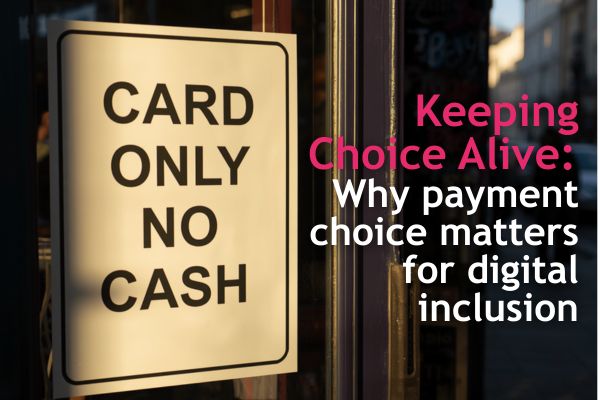
Many businesses are adapting to customer preferences and the growth of digital payments. LINK found that 14% of high street businesses surveyed had moved to cashless payments within the previous year.
Businesses highlighted several reasons for moving away from cash, including security concerns, fraud prevention, customer demand, and the cost and practical challenges of handling cash.
However, the move towards cashless payments also raises questions about accessibility. A payment method that works well for one person may create barriers for another.
A high street that only works for people who can pay digitally risks excluding customers who rely on cash.
The link between cash and digital exclusion
Digital exclusion is not only about whether someone owns a device or has an internet connection. It can also involve confidence, skills, affordability, accessibility needs, and whether services are designed with different users in mind.
When cash disappears from everyday transactions, people who face digital barriers may find it harder to take part in activities many of us take for granted.
This is why payment choice is closely connected to inclusion. Maintaining access to cash does not mean rejecting digital progress. Instead, it means recognising that different people have different needs.
LINK’s recommendations
The Keeping Choice Alive report highlights the need for a balanced approach that protects access to cash while recognising the continued growth of digital payments.
Key recommendations and themes include:
Maintaining access to cash
People need continued access to cash withdrawal and deposit services, particularly in communities where alternatives are limited.
Supporting businesses
Small businesses need practical and affordable ways to continue accepting cash if they choose to do so.
Recognising the impact of digital exclusion
Decisions about payments should consider people who may struggle to access digital options because of financial, social, accessibility or confidence barriers.
Keeping choice at the centre
The future of payments should not be about choosing between cash and digital. An inclusive approach allows people to use the method that works best for them.
Building a more inclusive future
Technology continues to change the way we live, work and pay. Digital services can bring huge benefits, but inclusion means making sure progress works for everyone.
The findings from LINK’s report show why choice matters. Cash remains an important option for many people, and protecting that option is part of ensuring that no one is left behind as society becomes increasingly digital.
Key facts from the report:
77%
of high street retailers still accept cash
46%
of in-person transactions are still made using cash
14%
of businesses surveyed became cashless within the previous year
More than half of cash-accepting retailers reported that cash use had declined over the past two years
LINK’s Keeping Choice Alive report highlights that the future of payments should be about accessibility, inclusion and giving people the ability to choose.
We believe moving towards a more digital society must be done in a way that protects choice and supports everyone, including older people who may face barriers accessing digital services.
As part of Later Life Ambitions, we are calling for banks and businesses to develop more accessible ways for pensioners to manage their finances safely, including better support, easier-to-use platforms, workshops and local banking hubs. We also believe stronger protections are needed to ensure vulnerable customers are considered when decisions are made about access to essential services, and that innovation should not come at the expense of inclusion.