
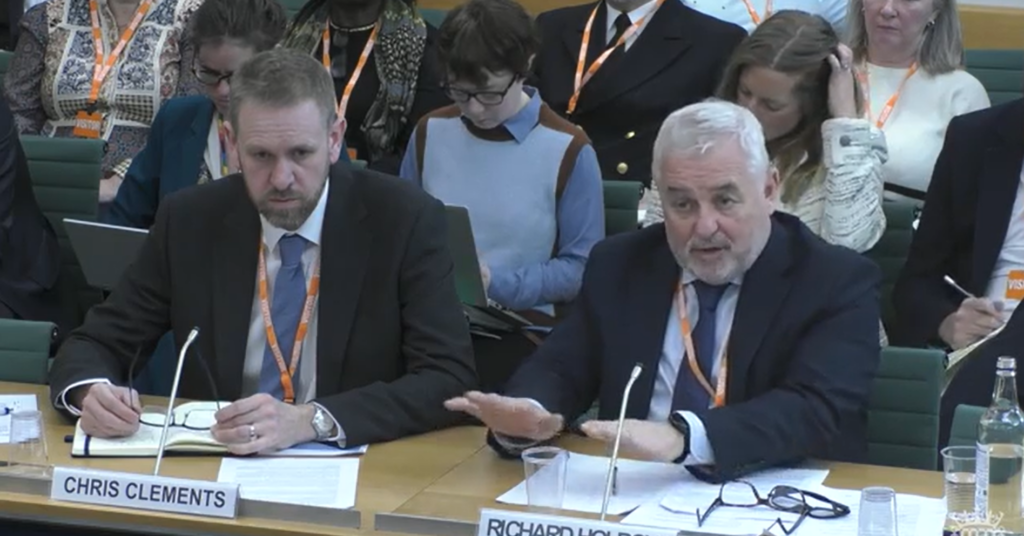
The Public Accounts Committee held a critical session examining Capita’s handling of the Civil Service Pension Scheme, highlighting serious service failures, data issues, and the scale of the inherited backlog. While some progress has been made since Capita took over administration on 1 December, MPs made clear that performance remains well below expectations.
Strong Opening Criticism from the Committee
Chair Sir Geoffrey Clifton-Brown MP opened proceedings by describing the situation as “unacceptable,” while acknowledging that Capita had been transparent and had taken responsibility. However, he stressed that scrutiny would continue—particularly around what Capita knew before the contract began.
The Committee pointed to evidence that Capita had been warned as early as July 2025 to prepare for up to 100,000 cases, raising questions about the adequacy of its preparation.
Capita Apologises and Details Recovery Efforts
Richard Holroyd, CEO of Capita Public Services, issued a formal apology for the poor service experienced by members. He emphasised that restoring service quality is the organisation’s top priority.
Since taking over, Capita has:
- Cleared or closed approximately 145,000 cases
- Reduced call waiting times significantly
- Eliminated a backlog of 15,000 unread emails
- Improved processing of urgent cases such as bereavements and ill-health retirements
Despite these improvements, Holroyd acknowledged that performance is still not where it should be. A recovery plan is now in place with the Cabinet Office, supported by additional surge staffing.
Recognition of CSPA’s Role
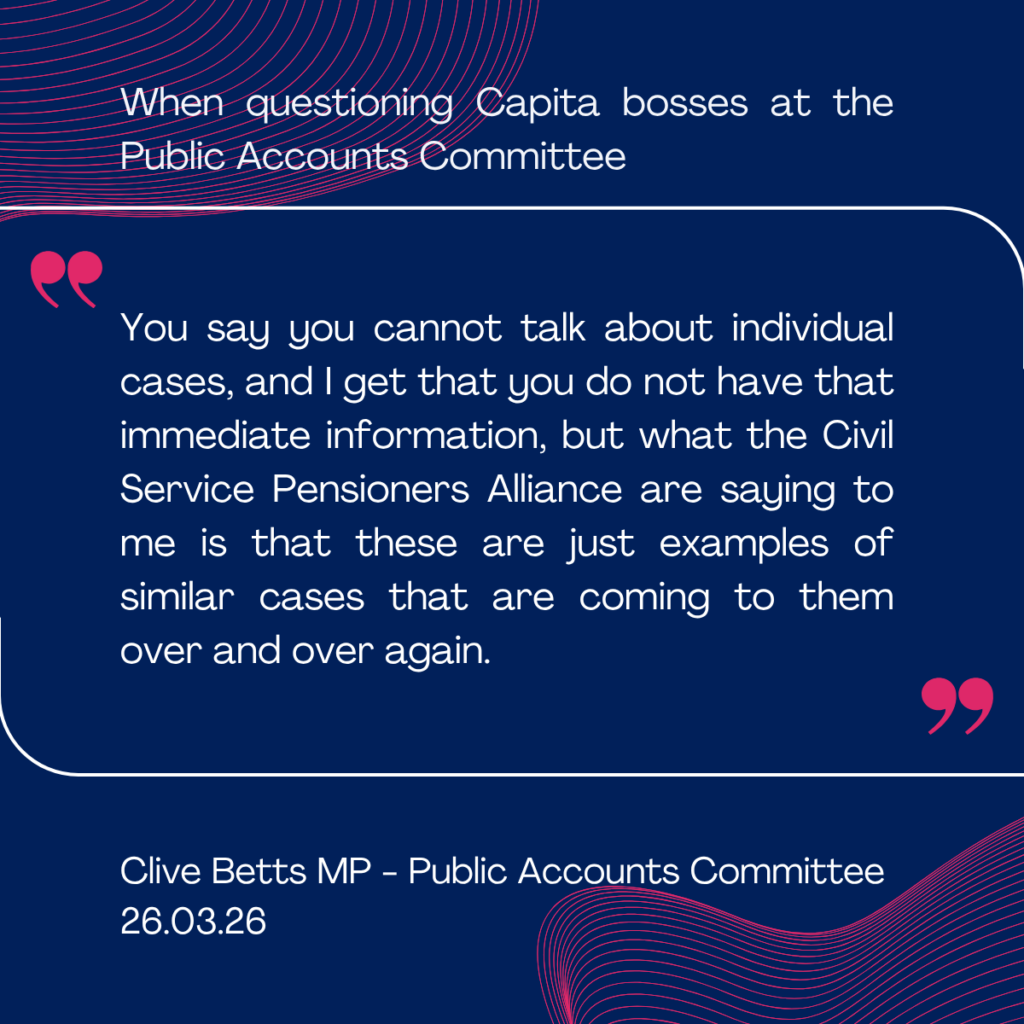
During the session, Clive Betts MP explicitly thanked the Civil Service Pensioners’ Alliance (CSPA) for its work supporting members affected by the failures.
CSPA has played a crucial role in:
- Assisting pensioners in navigating delays and administrative issues
- Raising awareness of unresolved cases
- Supporting individuals experiencing distress due to payment problems
This acknowledgment highlights the importance of independent member advocacy during the ongoing crisis.
Backlog Far Larger and More Complex Than Expected
Chris Clements, Managing Director, explained that Capita inherited around 89,000 cases at go-live, including 13,000 over a year old. Call volumes were also far higher than anticipated—reaching 25,000 in the first week instead of the expected 7,000–8,000.
Many cases were not only older but also more complex, often involving sensitive circumstances. In some instances, cases had not been properly recorded by the previous provider. This forced Capita to shift rapidly from routine processing to a crisis-response “surge” model focused on urgent cases.
Data and Due Diligence Concerns
A key theme of the session was the quality of data inherited by Capita. The company reported receiving inconsistent and incomplete datasets during the transition, making it difficult to assess the true scale of the workload in advance.
After gaining full access post-transition, Capita identified around 20 million lines of data containing errors, with approximately 70% of cases requiring some level of correction.
The Committee expressed scepticism, suggesting that warning signs should have been identified earlier.
Ongoing Operational Challenges
Capita confirmed that:
- Around 140,000 cases remain open
- Roughly 40,000 of these are lower-priority general enquiries
- Priority calls are now answered in under 20 seconds on average
- 98% of calls are being answered, though satisfaction scores remain low
IT systems were implemented in phases, with full functionality expected by the end of March. While the system was operational at go-live, early technical and scaling issues added to the disruption.
Focus on Urgent and Vulnerable Cases
Capita has prioritised:
- Bereavement cases
- Ill-health retirements
- Lump sum payments
The company aims to resolve all bereavement-related cases by the end of April. However, MPs raised concerns about delays affecting vulnerable individuals, including those in serious or terminal conditions.
McCloud Cases Deprioritised
Capita confirmed that cases related to the McCloud remedy are currently being deprioritised while urgent cases are addressed. These are not expected to be fully progressed until normal service resumes, with more substantial work planned from June.
Financial Support and “Hardship” Concerns
MPs raised concerns about how financial support is communicated to affected individuals. While Capita does not issue hardship loans directly, some members have been referred to their departments for interim support.
The Committee argued that such support should be framed as advances on owed payments rather than loans—a point Capita agreed to review.
Staffing and Support Measures
Capita has:
- Taken on 330 staff from the previous provider
- Recruited additional personnel
- Utilised HMRC staff to support operations
This surge capacity has helped stabilise the service, though reliance on additional support is expected to reduce gradually from the end of April.
Timelines for Recovery
Capita outlined the following targets:
- End of April: Resolution of most urgent cases
- End of June: Return to normal service levels
However, MPs challenged earlier assurances that improvements would be delivered sooner, pressing for clearer and more detailed timelines.
Accountability and Next Steps
In closing, Richard Holroyd confirmed he would remain in post to oversee recovery efforts and take responsibility for resolving the issues. The Committee has requested monthly progress reports to ensure continued oversight.
Conclusion
The session underscored the severity of the challenges facing Capita, particularly the scale of the inherited backlog and the poor quality of underlying data. While progress has been made—especially on urgent cases—significant work remains.
The recognition of CSPA’s support role also highlighted the real-world impact on pensioners and the importance of advocacy during service failures. With deadlines set for April and June, the coming months will be critical in determining whether Capita can restore confidence in the system.
If you have retired,or are approaching retirement, and are experiencing issues with your civil service pension, it’s important to get support. The Civil Service Pensioners’ Alliance (CSPA) can provide guidance, help with unresolved cases, and ensure your concerns are properly addressed. Joining CSPA gives you a trusted source of advice and support as you navigate your pension arrangements.